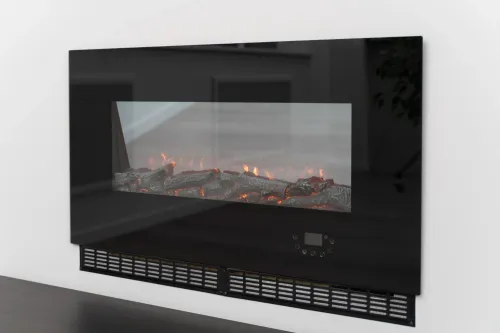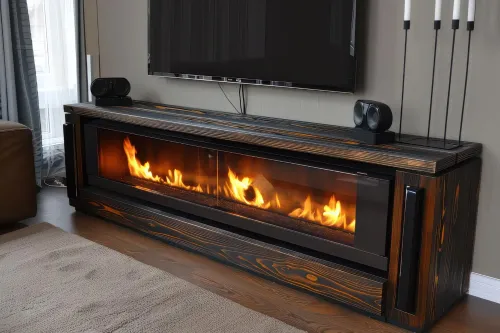
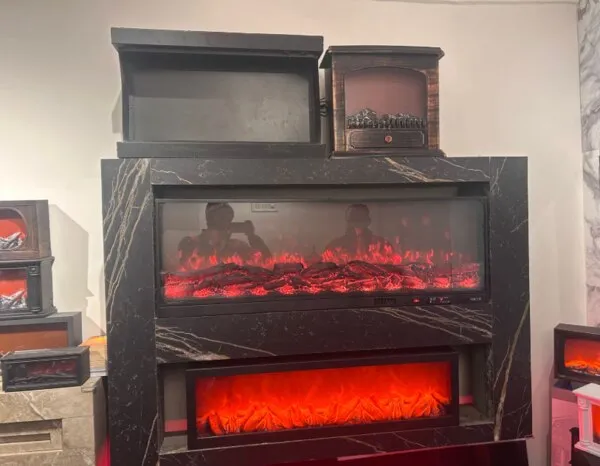
The appliance combines two separate systems: an LED display that creates the flame image and an electrically powered fan heater that warms room air. By the end, you can identify how the controls, thermostat, airflow, electrical supply, size, and installation requirements affect its operation and suitability for your room.
Key takeaways
- LED flame effects create light, not combustion or heat.
- Keep heater airflow clear and use the circuit load specified by the manufacturer.
- Choose 36, 48, or 60 inches to suit wall scale and viewing distance.
- Safety cut-offs stop heating after overheating or abnormal temperature conditions.
What happens when you switch on the flame and heater
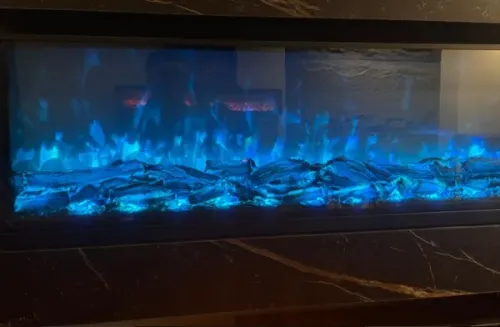
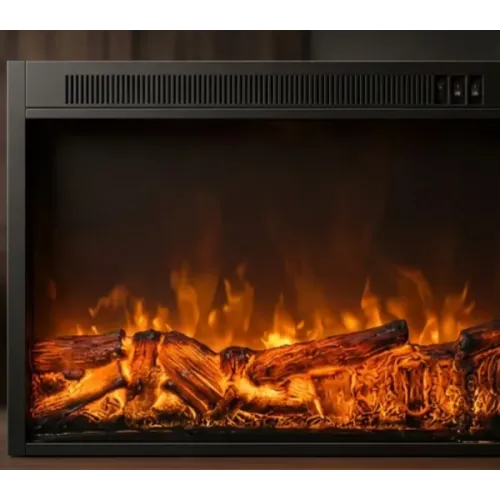
Pressing the power button does not ignite fuel. LEDs illuminate a rotating, refracting, or projected flame-effect assembly, creating moving light behind the logs or ember bed. Colour and brightness change the picture, not the heat output.
That is how classic multi color electric fireplace with heater works: the flame display and heater operate as separate electrical systems. Use the remote or control panel to select flame-only mode, heat mode, or both.
- The flame circuit powers the LEDs and visual-effect mechanism.
- The heater circuit energises a resistance element.
- A fan draws room air across that element and pushes warmed air through the front grille.
- A thermostat or temperature setting cycles the heater to maintain the selected room temperature.
The flame can usually run with heat switched off, which lets you use the fireplace for ambience during Delhi’s warmer months without adding warmth. An electric model creates no open flame, consumes no ethanol, and does not use the mist generator found in a water-vapour fireplace.
Keep the air inlet and front outlet clear. Curtains, furniture, or a tight recessed cavity can restrict circulation, reduce heating performance, and trigger an over-temperature cut-off.
Before using heat, read the specification label for rated voltage and wattage. Connect the earthed plug to a suitable wall socket on a circuit that can carry the load. Do not use a loose adaptor, undersized extension board, or overheated socket; crackling, discoloration, plug heat, or repeated breaker trips signals an electrical fault.
How warm air moves, and what the electrical supply must provide
The heater draws room air through an intake grille, passes it over an electric resistance element, and returns the warmed air through an outlet grille, usually at the front or lower edge. Keep both grilles clear: a sofa, curtain, dust build-up, or tight cavity can restrict airflow, raise internal temperature, and trigger a safety cut-off.
| Mode | What operates | Practical result |
|---|---|---|
| Flame-only | LED flame display and its control circuit | Ambience without heat; useful during Delhi’s warmer months |
| Heat mode | Fan, resistance element, thermostat, and controls | Warm air returns to the room until the set temperature or safety limit is reached |
Before installation, complete these checks:
- Read the specification label for rated voltage, frequency, and wattage. A 120-volt North American model must not connect to Delhi’s nominal 230-volt supply unless the manufacturer explicitly approves it with suitable conversion equipment.
- Use a properly earthed wall socket and the plug supplied or specified for the appliance. Do not remove the earth pin.
- Check that the circuit and protective device can carry the heater’s full wattage alongside other loads. A qualified electrician should confirm the circuit rating.
- Do not use an undersized extension lead, loose adaptor, or overloaded power strip. If an extension is unavoidable, match its voltage, current, and wattage rating to the appliance.
- Stop using the unit if the plug or socket becomes hot, discoloured, cracked, or crackles, or if the breaker trips repeatedly.
- Before closing a recess, confirm the manual’s clearances, airflow openings, cable route, service access, and approval for in-wall installation. Ensure the isolation switch or plug remains accessible.
How to choose between 36-inch, 48-inch, and 60-inch formats
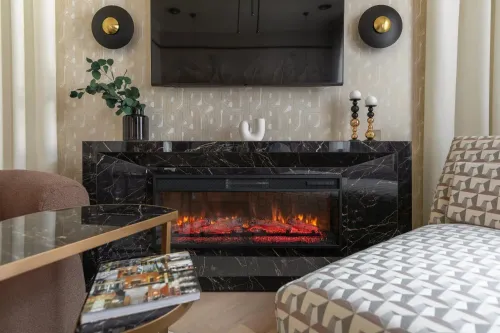
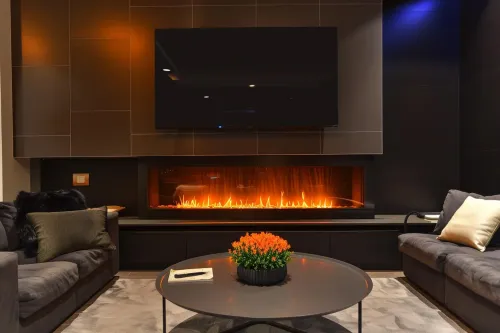
Nominal width tells you the viewing span, not whether the unit belongs on your wall. Measure the clear wall, finished cavity, furniture clearance, and cable route before choosing. A 36 inch electric fireplace heater can suit a narrow media wall, while a 60 inch electric fireplace heater needs enough uninterrupted width and a proportionate surround.
| Format | What to compare | Fit decision |
|---|---|---|
| 36 inch | Smaller viewing span; check nameplate wattage, rated room area, thermostat range, and heater outlet position | Choose for limited wall width or compact furniture, not automatically lower heat |
| 48 inch | Middle footprint; verify the manual’s cut-out dimensions and front-grille clearance | Choose when the cavity and seating wall allow balanced proportions |
| 60 inch | Wider viewing span; confirm cavity depth, support, airflow, and service access | Choose only when the wall, furniture layout, and electrical route accommodate it |
Before closing a recess, confirm the manufacturer-approved in-wall use, cavity width, height and depth, ventilation clearances, accessible isolation switch, cable route, and access to controls and the heater outlet. A blocked grille or buried connection turns a neat installation into a service problem.
- Match the appliance label’s voltage and frequency to the supply; a 120-V model cannot use Delhi’s nominal 230-V supply without explicit compatibility or suitable conversion equipment.
- Size the circuit and plug from actual wattage, not width; a 1,500-W unit draws about 6.5 A at 230 V.
- Ask Fireplacewale for the exact cut-out drawing and outlet location before selecting a classic electric fireplace with heater in Delhi.
Related products
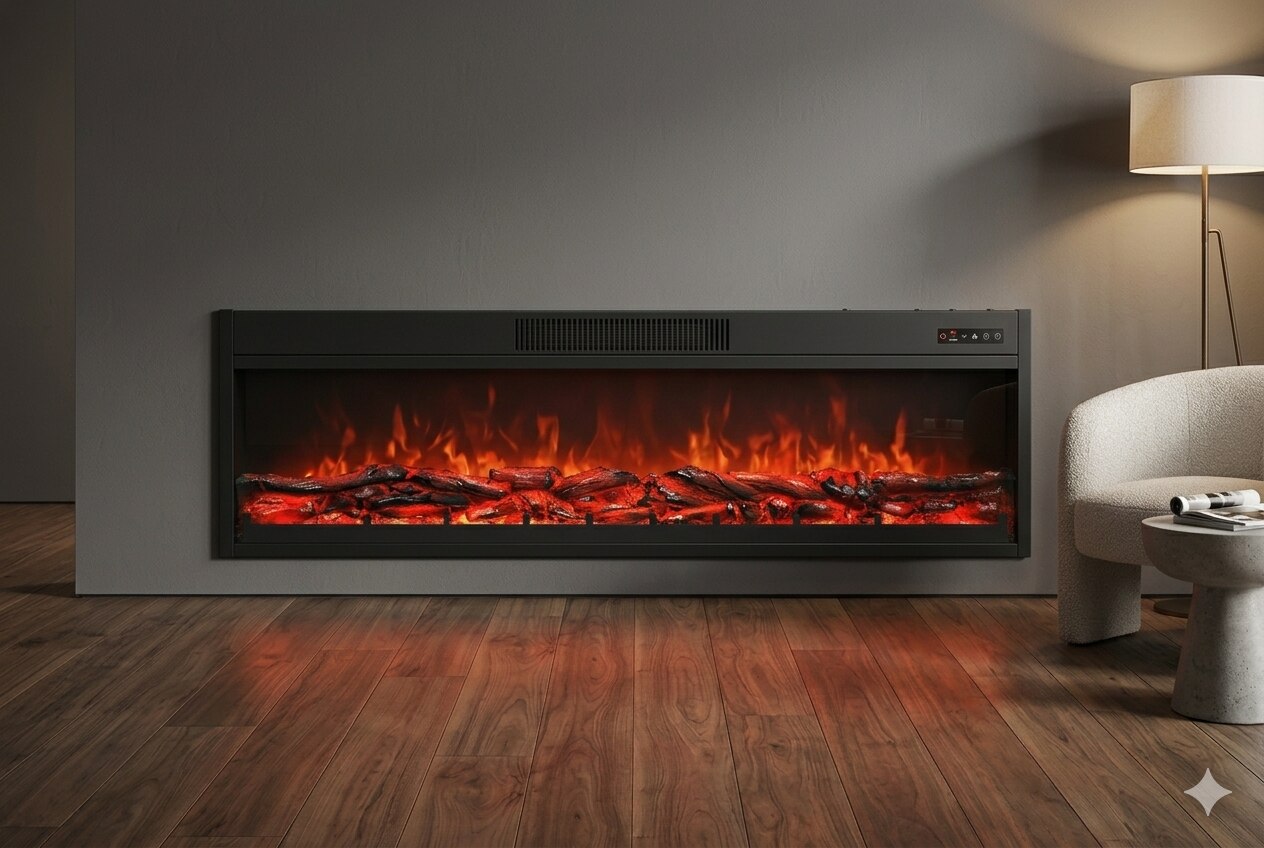 | Heater Fireplacewale Classic Multi Color Electric Fireplace with Heater (48inch) ₹47240 Transform your interiors with the Fireplacewale Classic Multi Color Electric Fireplace featuring realistic LED flames, elegant linear design, and... View product → |
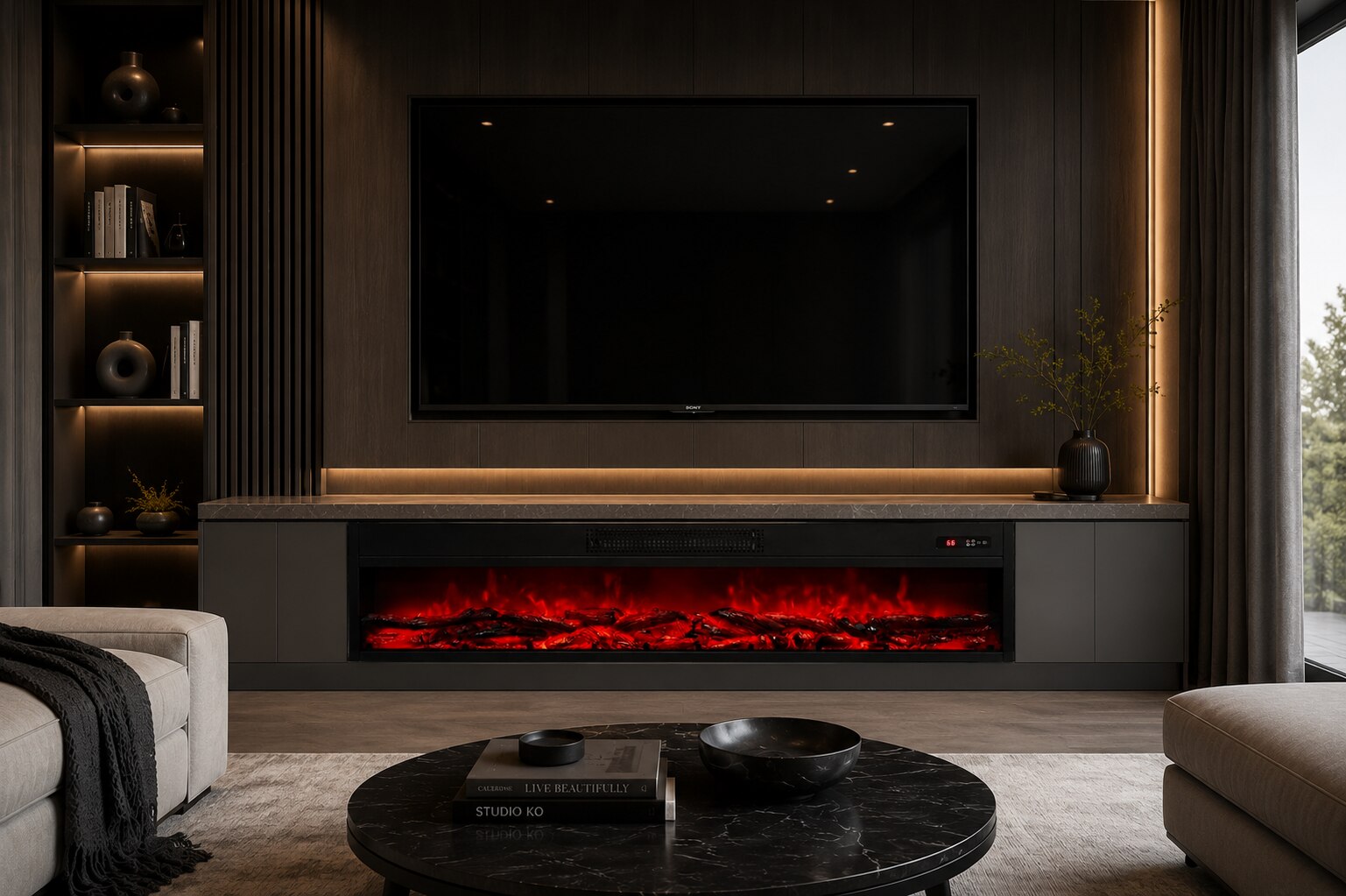 | Electric Fireplace Fireplacewale Classic Multi Color Electric Fireplace with Heater (60x16inch) ₹57800 Transform your interiors with the Fireplacewale Classic Multi Color Electric Fireplace featuring realistic LED flames, elegant linear design, and... View product → |
How the heater compares with other ways to warm a room
An electric fireplace heater is more practical when you want clean, localised supplementary heat without fuel, combustion, or building work for a flue. It suits a Delhi living room where you want warmth near seating and a flame effect, rather than an appliance sized to heat the entire home.
| Option | Practical advantage | Limitation |
|---|---|---|
| Electric fireplace heater | Instant resistance heat, flame-only operation, no chimney or combustion products from the appliance | Usually supplementary heat; nameplate wattage and airflow determine output, not the 36-inch, 48-inch, or 60-inch width |
| Oil-filled radiator | Quiet, portable heat with no fan noise and residual warmth after switching off | Takes longer to warm up and provides no flame effect; its hot surface needs clearance from curtains and furniture |
| Split air-conditioner in heat mode | Better choice for heating a larger, reasonably sealed room because it moves heat rather than creating it directly | Requires a suitable installed system, outdoor unit, maintenance, and a reverse-cycle model; airflow can feel draughty |
| Wood or gas fireplace | Strong fire ambience and, with the right installation, substantial heat | Needs fuel, ventilation and clearances; wood creates smoke and ash, while gas needs a compliant flue or approved venting arrangement |
Choose the electric model for room-by-room comfort, quick use, and installation where a chimney is impossible. Choose the split system for sustained whole-room heating. An oil-filled radiator wins on portability, while wood or gas makes sense only when you accept fuel handling, ventilation, maintenance, and installation requirements.
Its stated room-size rating remains an estimate, not a guarantee.
What multi-colour settings and safety cut-offs actually change
The controls divide into appearance, heat, and protection. Colour, flame brightness, ember-bed lighting, and crackle volume alter the display or sound; they do not increase the heating element’s electrical capacity. The flame effect can remain visible in flame-only mode, useful in Delhi’s warmer months.
| Control | Changes | Does not change |
|---|---|---|
| Colour | Flame hue and visual character | Heat output |
| Brightness | Flame and ember-bed intensity | Heat output |
| Crackle sound | Audio volume or on/off status | Flame temperature |
| Thermostat | Cycles the heating element to hold a set temperature | Continuous maximum heat |
| Over-temperature cut-off | Stops the heater after unsafe internal heat rises | The decorative flame display |
A thermostat can leave the LEDs and display active while the element is temporarily off. Do not treat a visible flame as proof that the heater is running.
Verify these points in the manual before installation:
- Whether flame, heater, ember light, and sound operate independently.
- The thermostat’s temperature range, sensor location, and control method.
- Whether over-temperature protection resets automatically or needs a power reset.
- The required clearance around air inlets and outlets, especially inside a cavity.
- Whether the remote duplicates every panel control and whether a child lock exists.
Blocked grilles, dust, curtains, or furniture can trigger nuisance shutdowns or cause overheating. Keep the specified airflow path clear even in flame-only use, because you may switch the heater on later.
Frequently asked questions
Does an electric fireplace flame use fuel or produce real fire?
No. LEDs illuminate a rotating, refracting, or projected flame-effect assembly behind logs or an ember bed. The display creates light without combustion, smoke, or fuel.
How does the heater warm a room?
An electric heating element warms air, and an internal fan moves that air through the outlet into the room. Keep the inlet and outlet clear so airflow is not restricted.
What electrical supply does an electric fireplace heater need?
Use the voltage, wattage, circuit rating, plug type, and installation instructions stated on the fireplace’s rating plate and manual. Have an electrician check the circuit before electric fireplace installation in Delhi.
Which size should you choose: 36-inch, 48-inch, or 60-inch?
Choose a 36-inch electric fireplace heater for a smaller wall or compact room, 48 inches for a balanced mid-sized installation, and a 60-inch electric fireplace heater for a broad feature wall. Check the unit’s clearances and the wall’s proportions before ordering.
How do multi-colour settings affect heat output?
Colour and flame brightness change the visual effect, not the heater’s output. Heating depends on the heating element and its selected temperature or power setting.
Related product
 | Heater Fireplacewale Classic Multi Color Electric Fireplace with Heater (36inch) ₹36680 Transform your interiors with the Fireplacewale Classic Multi Color Electric Fireplace featuring realistic LED flames, elegant linear design, and... View product → |
Keywords